Dr. Paul E. Chasan, a board-certified San Diego rhinoplasty surgeon, covers common questions that his patients often ask before having a rhinoplasty.

What to Consider when Planning Cosmetic or Functional Rhinoplasty in San Diego

Achieving mastery of a rhinoplasty procedure involves an intimate understanding of the numerous structures and maneuvers among different skin, bone, and cartilage characteristics while also learning to understand and achieve the goals of each individual patient. Having the skill set to consistently produce great patient outcomes is rare, and when you are looking for your rhinoplasty surgeon, you want to make sure you found one who has the commitment and experience to get your rhinoplasty right the first time.

If you are looking into rhinoplasty in San Diego, make sure you get it done right the first time. Dr. Chasan has seen many revision rhinoplasty cases where the outcome was completely avoidable – some patients come in with unfinished work or not enough structure, which is the mark of a surgeon who doesn’t have the confidence to go all the way to give you the outcome you are looking for. That’s why working with a master surgeon is essential for both peace of mind and assurance of your best potential outcome.

Ranch & Coast Plastic Surgery logo
Dr. Chasan speaking with patient

Dr. Chasan has performed thousands of rhinoplasties for over 30 years. He sees his work as a lifelong commitment to the art. He brings an unusual level of experience to the table, placing his quality of work at the top of the list. As a result, Dr. Chasan receives many patients for both new rhinoplasties and revision rhinoplasties alike.

Below, learn more about the rhinoplasty procedure itself.

Rhinoplasty Before & After

View Gallery

What Kind of Surgeon Do I Need for A Rhinoplasty?

Dr. Chasan speaking

What is a Rhinoplasty?

Before we take a deep dive into the finer points of rhinoplasty, let’s start with some basics: Rhinoplasty is essentially nose reshaping. A Rhinoplasty may involve modification of the external or internal nasal structures to achieve an improved aesthetic or function of the nose. This is a relatively common procedure that has been performed for over a century.

Rhinoplasty has been around since the sixth century. The first modern procedure was in 1887, and in 2017, 44,676 people in the United States reported having a rhinoplasty while 877,254 people worldwide had rhinoplasties performed, according to a statistical report published in the International Society of Aesthetic Plastic Surgery.

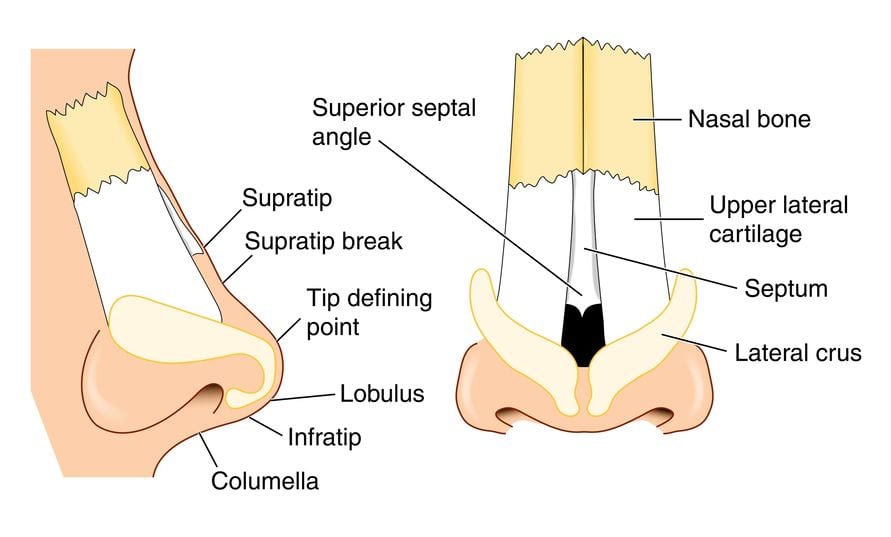
There are three main structures in the nose that might be modified during a rhinoplasty operation:

  1. Alar—cartilage from the tip of the nose

  2. Bony Dorsum

  3. Septum—cartilage that separates the nostrils and forms the bridge of the nose, it supports the alar cartilages

nose infographic

Rhinoplasty usually refers to the modification of the external nose and may involve adjustments to all three structures. When talking about nose operations you might also hear the term “septoplasty” or “turbinoplasty.” This refers to the modification of internal structures of the nose that is often adjusted in conjunction with external structures.

How Much Does Rhinoplasty Cost?

Rhinoplasty with Dr. Chasan: general range is $16,500; schedule a private consultation for a custom quote.

What does Rhinoplasty Surgery Involve?

Rhinoplasty operations are very goal-oriented. An experienced plastic surgeon will take the time to look at your face, talk to you about what you are hoping to get from a rhinoplasty operation, and plan out your expected outcome from the procedure.

People can seek a rhinoplasty for functional reasons (breathing difficulties) or aesthetic reasons (easily corrected defects like a dorsal hump, bulbous tip, drooping tip, prominent nostril, or hanging columella). Most patients will find they experience a combination of functional and cosmetic effects from Rhinoplasty surgery.

Cosmetic rhinoplasties usually include modification of both the nasal septum and the nasal tip. Your surgeon will likely have to detach the tip of the nose to change the shape of the bridge (dorsal hump). And if a surgeon only wanted to improve airflow, they must adjust the tip of the nose to accommodate more room through the nostrils.

When it comes to rhinoplasty, the bottom line is you need an experienced surgeon—one who sees the nose as a comprehensive system of intimately connected parts and understands how the structures interrelate. Dr. Chasan has this understanding, and it is exactly this kind of experience that can make your outcome more predictable, as well as save you from having a secondary procedure.

Banner media

What is the Difference Between Cosmetic or Functional Rhinoplasty

A “cosmetic rhinoplasty” is an operation to achieve aesthetic outcomes, while “functional rhinoplasty” is an operation for restoring nasal airflow.

The truth is, the structures that shape the nose also affect breathing. Because of this, it’s not always easy to differentiate between the two operations. A patient who is having a broken nose repaired for breathing reasons can also have a secondary aesthetic benefit.

About 70% of people who seek revision rhinoplasty do so because of breathing difficulties.

What are the Risks of a Rhinoplasty?

It’s very important to weigh the risks and benefits before undergoing any surgical procedure—especially cosmetic or elective ones like rhinoplasty. Your surgeon should take the time to thoroughly explain the procedure and clearly outline potential risks so you can make an informed decision. It’s always okay to take time before committing, seek a second opinion, and even bring a friend to your consultation to help you remember questions and information.


Rhinoplasty is a safe and highly specialized procedure, but like all surgeries, it does carry some risk. The overall major complication rate is low (about 0.7%), with bleeding, infection, and hematoma each occurring in roughly 0.2% of cases. General surgical risks also include scar formation, infection, and fluid accumulation at the operative site. More specific risks related to rhinoplasty include the possibility of reoperation and, in some cases, changes in or blockage of airflow. Additionally, patients should be aware of a 5–15% revision rate, which reflects the complexity of nasal anatomy and the healing process rather than poor outcomes. Temporary swelling, bruising, and congestion are normal parts of recovery.


Choosing an experienced surgeon significantly reduces these risks. Board-certified plastic surgeons with extensive experience tend to achieve higher success rates and more predictable outcomes. Dr. Paul E. Chasan, for example, brings over 30 years of rhinoplasty expertise and has helped thousands of patients achieve successful results. He operates in a fully accredited surgical center with board-certified anesthesia providers and strict safety protocols, all of which contribute to safer procedures and natural-looking outcomes.


A good surgeon will always welcome questions about risks and provide clear, thoughtful answers. Whether or not you decide to move forward with rhinoplasty, it’s important to remember that this is a deeply personal decision—one that should be made on your own terms.


If you’re considering rhinoplasty or would like a second opinion, we’re here to help. We invite you to request a consultation to learn more about your options and feel confident in your next steps.

Banner media

Further Reading

Contact us media
Accessibility: If you are vision-impaired or have some other impairment covered by the Americans with Disabilities Act or a similar law, and you wish to discuss potential accommodations related to using this website, please contact our Accessibility Manager at (858) 216-8884.
Book Consultation